top of page
Search

Land of a Thousand Wineries

  • Jul 5
  • 1 min read
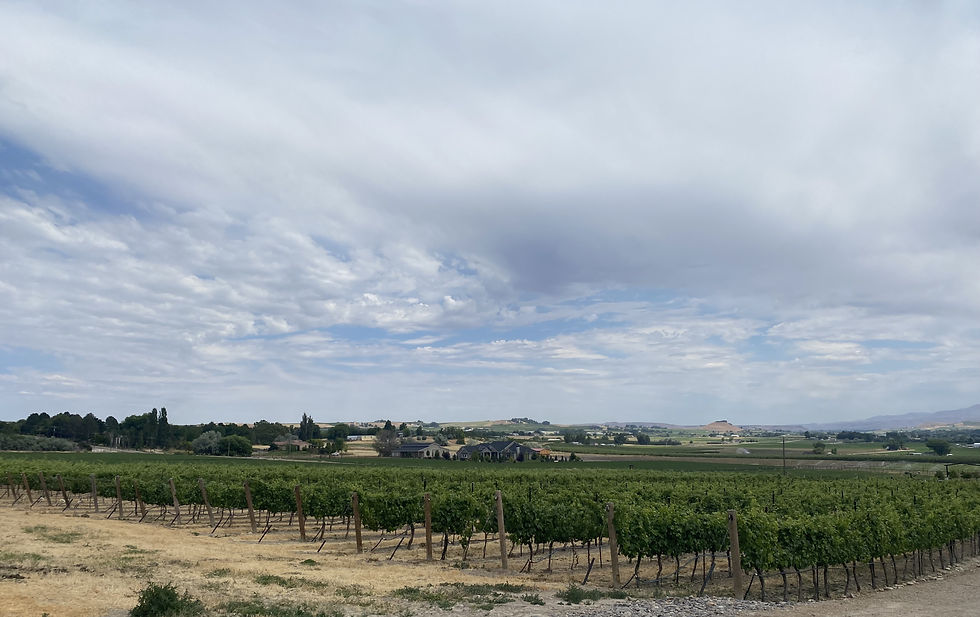
One of several wineries in Caldwell, ID

Day 16 and our next stop is Caldwell, Idaho to meet up with a couple of good friends there. We had a couple of these stops, one here and another in Montana, to break things up a bit.


This entire region from eastern Idaho up through eastern Washington and BC Canada is filled with wineries. We visited several on our trip including here in Caldwell ID. I think most of these smaller wineries never make it into stores where we typically buy wine. That's really unfortunate because all of these local wines we tasted were phenomenal! I have in the past stayed away from wines produced in the US, but if you actually go to one of these places and have their locally produced wine you will be blown away!


Dinner with friends in Caldwell

We stayed 2 nights here in Caldwell. Our friends have a great place with an amazing garden! We're having fresh cod for dinner. Afterward I was helping out my friend who is a fellow astronomer troubleshoot his remote imaging setup.


All in all a welcome and tasty rest stop!


Thanks for reading!


DrDave


Comments


LP atlas.png

The Bortle dark-sky scale (usually referred to as simply the Bortle scale) is a nine-level numeric scale that measures the night sky's brightness of a particular location. It characterizes the observability of celestial objects, taking into account the interference caused by light pollution. Amateur astronomer John E. Bortle created the scale and published it in the February 2001 edition of Sky & Telescope magazine to help skywatchers evaluate and compare the darkness of night-sky observing sites.

The above Light Pollution Atlas was compiled in 2024. It is obvious that most of the US is dominated by fairly severe light pollution! Only a few areas in the western 1/3 of the country have what can be considered a dark sky. It is a sobering fact that the dark night is a dwindling natural resource.

Bortle.png

What is dark? This image courtesy of ESO/P. Horálek, M. Wallner  shows the appearance of the Milky Way under the various Bortle sky scale values. The overwhelming majority of the world's population will never see anything darker than around Bortle 7.

This is a color coded Bortle map of the region surrounding my remote observatory in Pie Town, New Mexico. The '+' is the actual location so there we are at Bortle 1-2, pretty dark!

Bortle 2.png

This is a detailed color-coded description of each Bortle scale value courtesy of ClearDarkSky.com, which is a popular resource for astronomers. It provides local Bortle maps for hundreds of observing sites in North America.

So what is the take home message here? The Bortle Sky Classification or Scale is a useful resource to identify the darkest observing sites. ClearDarkSky.com can be used to find many of them, but even a general search using tools such as AI should be able to tell you how dark any campsite is in the world! The dark night sky is a dwindling natural resource and we are not sure how long the remaining areas that are accessible currently will stay dark. My advice is not to wait. Go out there and experience it while you can!

Thanks for reading!

DrDave

bottom of page